
Lipton's Seat: The Grocer, the Tea Estate and the View Above Haputale
Lipton's Seat is a viewpoint on the ridge above the Dambatenne tea estate, near Haputale, over 6,000 feet up. On a clear morning you look south across the lowlands as far as the Udawalawe reservoir, with tea running down the slopes below you. It is named after Thomas Lipton, the Glasgow grocer who bought this estate in 1890 and whose name became one of the best known in tea.
Lipton's Seat at a glance
- Where: on the ridge above the Dambatenne estate, about 9 km from Haputale to the factory and 6 to 8 km more to the viewpoint
- Height: over 6,000 feet, about 1,900 metres
- From Ella: allow about an hour and a half by road
- Best time: sunrise to about 9am, before the cloud comes in
- Entry: a small fee at the gate, paid in cash; travellers reported about 500 rupees in 2025
A grocer from Glasgow
Thomas Lipton built a chain of grocery shops across Britain in the 1870s and 1880s, and by the end of the 1880s he was selling tea too. In 1890 he came to Ceylon. Coffee rust had been ruining the island's coffee estates since 1869, and many planters were in trouble. Above Haputale, a planter called Reginald Downall had bought Dambatenne in 1877, clung to coffee and died in debt in 1888. Lipton bought his old estate.
His idea was to sell tea cheaply in standard packets, at about half what other shops charged, under a slogan that became famous: direct from the tea garden to the teapot. The garden was real. But by the reckoning of tea historians, his own estates could not have supplied a tenth of what he sold, so the rest he bought and blended like everyone else. He did not invent packet tea either; he made it cheap and made it famous.
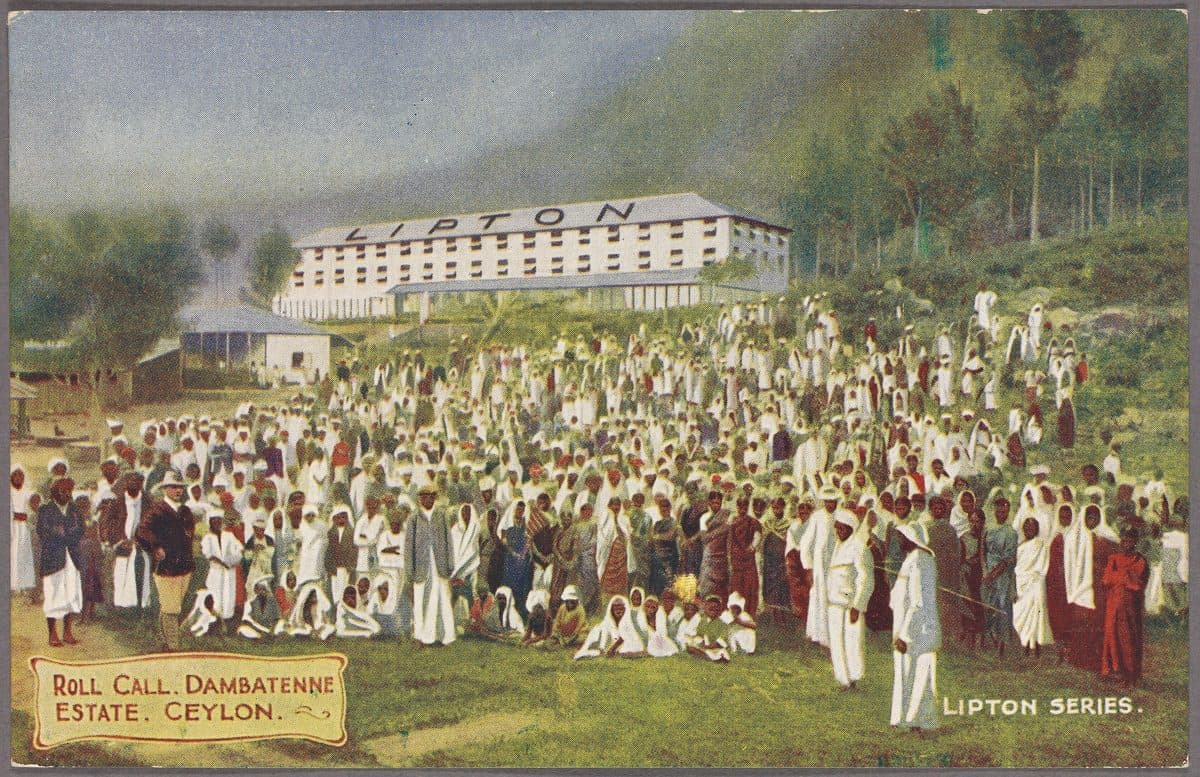
He sold it loudly. When his first big shipment of tea arrived, he had it paraded through the streets on fifty drays with brass bands and pipers. He was knighted in 1898, challenged for the America's Cup five times without winning, and was given a gold cup by American admirers as "the best of all losers". He died in 1931.
The legend of the seat
Legend says Lipton used to sit on this ridge to look out over his estates, and the spot has been called Lipton's Seat ever since. There is a statue of him there today. You will also hear that you can see seven of Sri Lanka's provinces from the top. That is part of the legend too, but on a clear morning the view really does stretch a very long way south across the plains.
The Dambatenne tea factory
Lipton's factory at Dambatenne, built in the 1890s, still makes tea. Visitors can usually join a short tour to see the leaf withered, rolled, dried and sorted, for a small fee. Processing does not run every day, so on some days there is less to see.
Visiting Lipton's Seat
Go early. The cloud usually rolls in by about 9am, and after that the view can disappear completely. Many people take a tuk-tuk from Haputale before dawn, which takes about half an hour, then walk back down through the tea to the factory, which takes around two hours at a steady pace and is the best part of the morning. If the gate at the bottom of the last stretch is closed to vehicles, it is about 1.5 km on foot to the viewpoint.
- Bring cash in rupees for the entry fee and the factory tour
- A warm layer: at over 6,000 feet, dawn is cold
- Shoes for the walk down through the estate
- Respect the estate: stay on the road and paths, and ask before photographing the tea pluckers
Getting there from Ella
Lipton's Seat is not on one of our set tours, but it makes a good morning out from Ella. Allow about an hour and a half by road each way. If you would like to go with us, ask us about a private trip.
While you are in the hills, read why the island's tea is still called Ceylon in our Ella travel guide, or see our tours in Ella.
Questions travellers ask
What is Lipton's Seat?
A viewpoint on the ridge above the Dambatenne tea estate near Haputale, Sri Lanka, over 6,000 feet up. It is named after Thomas Lipton, the Glasgow grocer who bought the estate in 1890. Legend says he sat there to look out over his estates, and a statue of him stands there today.
What time should I go to Lipton's Seat?
As early as you can, ideally for sunrise. The cloud usually comes in by about 9am and can hide the view completely.
How much does Lipton's Seat cost?
There is a small entry fee at the gate, paid in cash. Travellers reported about 500 rupees in 2025, plus a little extra for a vehicle. The Dambatenne factory tour is a separate small fee.
How far is Lipton's Seat from Ella?
Allow about an hour and a half by road from Ella. From Haputale it is about half an hour by tuk-tuk, via the Dambatenne tea factory.
Can you see seven provinces from Lipton's Seat?
That is the legend. What is certain is that on a clear morning the view runs a very long way south across the lowlands, as far as the Udawalawe reservoir.
Did Lipton grow all of his own tea?
No. He sold his tea as coming direct from the tea garden, but tea historians reckon his own estates could not have supplied a tenth of what he sold. The rest was bought and blended.